
Rodrigo Leme
The Rising Challenge
Voice phishing isn’t new. Fraudsters have been calling employees and pretending to be executives for years. What’s new is the AI twist: deepfake technology. With just minutes of audio from a public speech or social clip, attackers can now generate synthetic voices that sound alarmingly real.
In 2025, these attacks aren’t isolated. They’re coordinated, often run by organized groups. Calls that once sounded suspicious now sound familiar, credible, and urgent.
In our experience, the challenge for CISOs is not just awareness—it’s readiness. Employees may know voice fraud exists, but when they hear a “familiar” leader demanding immediate action, instinct can override procedure. That’s why enterprises need clear, layered deepfake voice phishing defense strategies to stay ahead.
High-Profile Cases
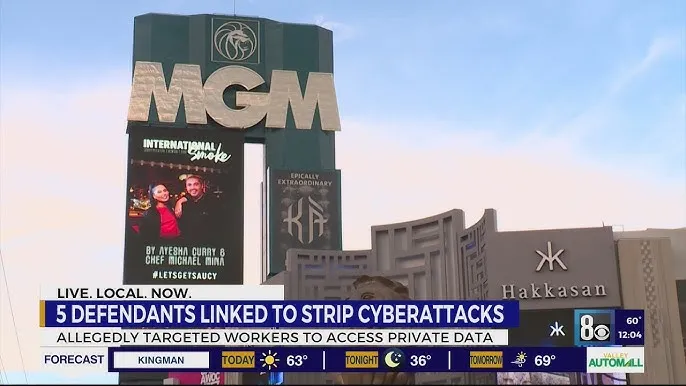
UK Energy Firm (2019): An employee wired €220,000 after a call mimicked their CEO’s voice.
Hong Kong Bank (2020): A series of convincing calls using synthetic voices of senior executives triggered a $35 million transfer.
Political Campaigns (2023–2024): Deepfake audio of public figures circulated to influence opinion and sow distrust.
Several of these appear in our Top 10 Real-Life AI-Powered Attacks factsheet—and they show how quickly attackers adapt while exploiting trust and urgency.
5 Best Practices to Mitigate Deepfake Voice Threats
1) Build Strong Verification Protocols
Any financial or privileged-access request must be verified by a second channel. A call-back to a known, independently sourced number—or a secure chat confirmation—breaks the attacker’s script and reduces manipulation risk.
2) Elevate Employee Education
Go beyond annual awareness. Teach people to spot cues of AI voice fraud: unnatural pauses, rushed timelines, unusual timing, or deviations from policy. Short, scenario-based refreshers keep signals top of mind.
3) Deploy Monitoring & Detection
Leverage call pattern monitoring, alerting on repeat spoof attempts, and routing anomalies. While AI deepfake detection is evolving, metadata and behavior-based signals already help surface suspicious activity.
4) Run Deepfake Vishing Simulations
Turn AI into a training advantage. Enterprise simulations that use lifelike synthetic voices safely replicate real-world pressure. When someone slips, immediate, contextual coaching follows—transforming a risky moment into learning that sticks.
5) Integrate with Human Risk Management (HRM)
Voice fraud is one vector among many. Integrate simulations, training, and behavioral analytics into a broader HRM program to maintain visibility, reduce breach-prone behavior, and reinforce culture over time.

Our Deepfake Vishing Agent
Right-Hand’s Vishing Agent is designed to operationalize these strategies at scale. It creates enterprise-ready deepfake vishing simulations that mirror real attacker tactics and urgency patterns—without requiring manual template building.
Unmatched Realism: Lifelike synthetic voices and social-engineering cues create authentic pressure, so teams practice real decisions in safe conditions.
Scalability Across Teams: Launch targeted campaigns by department, function, or risk profile to reach people where risk is highest.
Behavioral Insights: Outcome data highlights repeat vulnerabilities and response gaps, feeding dashboards for long-term risk reduction.
Paired with our Human Risk Management Platform, the Vishing Agent doesn’t just inform people—it prepares them. Employees practice real scenarios, receive immediate feedback, and strengthen the organization’s first line of defense.
Prepare for the Next Generation of Voice Attacks
Conclusion
Deepfake voice fraud is no longer science fiction—it’s here. Attackers are betting on trust, urgency, and sophisticated synthesis to bypass controls. But enterprises have effective counters.
With layered verification, sharper education, monitoring, and deepfake voice phishing defense strategies like AI-powered simulations—tied into a Human Risk Management program—organizations can stay ahead. In our view, the most resilient enterprises don’t just inform people; they prepare them. That’s where challenge meets strategy, and where readiness becomes culture.